15+ Volunteer Recruitment Ideas That Actually Work
Need more school volunteers? Try these 15+ volunteer recruitment ideas that make it easier for busy families to find a way to help.


Today’s families are juggling work, sports schedules, caregiving responsibilities, and packed calendars, leaving little extra time to spare. School communities are also more diverse than ever, with grandparents raising grandchildren, single parent households, blended families, and caregivers balancing multiple jobs and responsibilities.
As families have changed, volunteer recruitment has changed, too. PTOs that are growing their volunteer base aren’t necessarily finding parents with extra hours in the day. They’re finding creative ways to make volunteering fit into real life. Here are some ideas worth trying.
1. Build community before asking for help
Families are much more likely to volunteer when they feel connected to the school community—and when they see the PTO as something that adds value to their lives.
Look for ways to bring families together before you ask them to volunteer:
- Host casual gatherings: Popsicles on the Playground, an “Explore the School” scavenger hunt, Chalk the Walk, Donuts With Grownups, or a Friday Family Tailgate with lawn games, music, and picnic-style dinners are all low-pressure ways for families to get to know each other and your parent group.
- Offer something families can use: Think beyond traditional PTO events and look for ways to meet a real need in your community. Weller Road Elementary, for example, hosts an annual back-to-school haircut event with volunteer barbers from a local barbershop. Other ideas include clothing swaps, Halloween costume swaps, community resource fairs, and partnerships with local businesses.
- Make PTO meetings welcoming: Invite families to the final PTO meeting of the school year so they can meet the board and learn about upcoming plans. Throughout the year, host an occasional off-site gathering with free apps and refreshments or invite a guest speaker on topics parents care about, like digital safety.
The goal? Give families plenty of reasons to connect with your PTO before you ever ask them to sign up for a volunteer shift.
2. Help new families feel welcome
Incoming kindergarten and new families are often looking for ways to connect. When they feel included early, they’re more likely to get involved later. Welcome events like Kindergarten “Signing Day”, Boohoo/Yahoo Breakfast, and buddy family programs that pair new families with experienced families help build those first relationships (and future volunteers!) right from day one.
3. Recruit volunteers where parents already are
Every school event is an opportunity for your parent group to start conversations with families, whether it’s at Open House, Meet the Teacher night, a school concert, parent teacher conferences, or even the pickup line.
- Set up a can’t-miss PTO table with themed decorations and signage with QR codes that make it easy for parents to sign up to volunteer on the spot. Draw families in with a prize wheel and raffle giveaways. One PTO shared they gave out free squishies to every parent who signed up to volunteer and had 70 sign ups! Clever PTO's table theme, "Joining the PTO is kind of a big dill", was also a hit: they gave free pickles to anyone who signed up to volunteer!
- Host a "volunteer drive" during well-attended school family events.
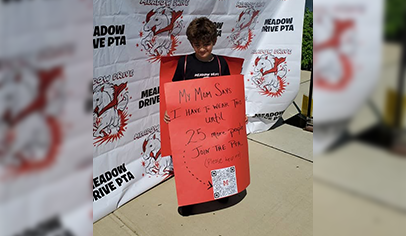
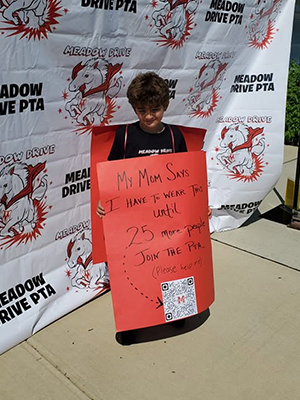
- Spread the word in the carline with playful messages and puns on signs or sandwich boards, like “VOL*NTEE*—What’s Missing? UR!” Take advantage of parents sitting idle in the carline. We love how Meadow Drive PTA came up with this fun idea for one of the PTA kids; the sign reads, "My mom said I have to wear this until 25 more people join the PTA! (Please help me)". We bet it worked!
4. Make your PTO feel fun, friendly, and approachable
Many parents think the PTO is its own social circle. Go out of your way to prove them otherwise—use name tags, introduce yourself, start conversations, and make sure no one is standing alone at events. Let this also be the message you consistently communicate on social media, too.
And sometimes, being approachable means not taking yourself too seriously. One PTA wore traffic cone costumes at pickup. Did they look ridiculous? Absolutely. Did parents stop to chat? Absolutely!
@notyouraverageptamoms Yeah we're this extra 😂 gotta keep that line moving! #mvspta #dontgoblockingdropofflines #target ♬ original sound - MVS PTA
5. Give families options that fit real life
Create a “volunteer menu” with opportunities based on time and talent. Some parents can help for an hour at the book fair. Others might design graphics in Canva after bedtime, write a grant application from home, or have the time and talent to build a carnival game in their garage.
The same goes for events. Instead of asking one person to chair the Bubble Run, break it into smaller roles—decorating, check-in, handing out bubble wands, setting up the foam machine, or cleanup.
6. Be specific about what you need
When parents know exactly what’s needed—and how much time it takes—they’re far more likely to say yes. Instead of asking for “Glow Dance volunteers,” break it into clear roles like setting up a balloon arch or passing out glow kits. A few examples:
- “We need 5 volunteers to greet students at High Five Friday from 7:30–7:50.”
- “Can someone spend 30 minutes at home cutting raffle tickets?”
- “We’re looking for one volunteer available to stock the staff lounge on Monday after school.”
Take it a step further: Don’t just rethink how you describe volunteer jobs—rethink the jobs themselves.
7. Get creative with volunteer opportunities
Volunteer opportunities at school don’t have to look like traditional volunteer jobs or sound "boring". Think about your school’s events, programs, and everyday needs and ask: Is there a more fun, interesting, or unexpected way someone could help?
For example, instead of asking to “help organize the lost and found,” invite volunteers to model lost-and-found items in a school fashion show. Need help with social media? Recruit a “Reel Team”. Have a stack of teacher copies to make? Call it the “Copy Crew”. Need someone to help welcome families? Create a “Welcome Wagon”.
The goal isn’t to make every volunteer job feel better than it really is. It’s to make parents stop and think, “Hey, I could do that!”, and sometimes, a fresh name is all it takes. Other times, it’s about turning an ordinary task into something social, creative, or connected to a skill someone already enjoys.
8. Try “micro volunteering”
Many parents have 15 to 30 minutes to spare, but assume volunteering requires a bigger time commitment. Offer quick-hit opportunities like making copies, assembling glow kits, greeting students on High Five Friday, or hanging teacher appreciation decorations.
9. Look beyond the "usual" volunteers
Grandparents, retired teachers, and even high school students looking for community service hours can all lend a hand. And don’t forget dads and male caregivers. Create fun, visible ways for male role models and mentors to support students and build school community through programs like:
- WATCH D.O.G.S.® (Dads of Great Students): a family engagement program used by schools across the country to engage positive male role models
- All Pro Dad: Their school chapter program brings dads and kids together for about an hour each month for relationship-building activities.
- High Five Friday: volunteers welcome students at arrival with high fives, fist bumps, and encouragement
- Door Dudes: male role models greet families in the drop-off line and open car doors for students
10. Make inclusion part of your strategy
When families feel like they belong, they’re more likely to get involved. Make sure information is available in the languages represented in your school community, consider offering translation support at PTO meetings, add support roles like a family liaison or inclusion lead, and use language like “families and caregivers” instead of "parents".
Make sure families see themselves in your PTO events. Be intentional with what you plan—like Multicultural Night—and what you call it. “Donuts with Grownups” instead of “Muffins with Mom,” or “Someone Special Dance” instead of “Daddy Daughter Dance” sends a clear message that everyone belongs.
11. Meet families where they are (in person and online)
Don’t rely on just one communication channel. Show up consistently across social media, newsletters, email, flyers, events, signage at the school, and even the car line. Some parent groups have even done mobile block parties that bring the PTO crew to different neighborhoods so families can connect right where they live. The more that families see you, the more likely they are to get involved.
Really lean into social media, too. (Check out 10+ creative PTO/PTA volunteer recruitment reels for inspo!) And remember, social media works best when it’s more than announcements. Share photos, behind-the-scenes moments, polls, memes, and video clips that show your parent group in action. A reel like “POV: Stocking Our School’s Care Closet” will go much further than a simple “Volunteers Needed to Help With Care Closet” post.
Bonus: Bring in middle and high school students to help create social media content—they often know more than we do!
12. Keep your PTO's “why” front and center
Don’t assume families know what the PTO does. Families are more likely to volunteer when they understand how their support makes field trips, teacher appreciation, fun family events, playground equipment, and more possible. Get the free "PTO Does That" banner stand Canva template (shown below)
13. Show families what’s in it for them
Don’t just focus on what the PTO needs—highlight what volunteers gain, too. Helping at the book fair is a great way to meet other parents and meet some of your kid’s classmates. Working the dunk tank puts you right in the middle of the action. And yes, even silly moments (like taping the principal to a wall) become shared memories. Volunteering often leads to friendships that last long after school ends.
The impact on students matters, but so does the connection families build along the way.
14. Talk about the impact
Regularly share how volunteer efforts support what your PTO does and how students and staff benefit. People are much more likely to help when they understand the difference they’re making. Be specific, celebrate progress, and show the impact of every hour given. Get a PTO "Year in Review" Canva template
15. Follow up quickly—and say thanks
Quick follow-up keeps volunteers engaged. When someone signs up, respond right away with clear next steps.
And once they’re in, don’t forget to say thanks. From social media shoutouts and thank-you notes to VIP of the month parking spots and volunteer appreciation breakfasts, small gestures go a long way.
16. Don’t be afraid to set boundaries (and yes, that means you may need to cancel an event)
Volunteer burnout is real. If an event doesn’t have enough support, let families know it may need to be cancelled. While that’s never an easy call, it helps reinforce an important truth: school events only happen when volunteers step up.
17. Offer a little incentive for volunteering
Sometimes, a little extra motivation can turn “maybe” into “I’m in”! Try offering a fun perk or entry into a raffle to families who sign up for a volunteer shift (and show up). The prize doesn’t have to be expensive. Think about things your school community would actually get excited about, like:
- Skip the carline pass: Enter volunteers into a drawing for a coveted pass that lets their family skip the pickup line.
- VIP parking spot: Reserve a prime parking space for a week or month.
- Front-of-the-line or front row pass: Give the winner a pass for a popular school event, book fair, or other school activity, or front row seats at a school performance.
- Coffee or lunch gift card: A local coffee shop or restaurant may be willing to donate a gift card.
- School swag: Enter volunteers to win a school hoodie, spiritwear, or other school gear.
A few more ideas worth trying:
- Partner with teachers and administrators. Staff can reinforce your message and encourage participation when they understand your goals.
- Ask families to start by giving just one hour! Many families want to help but assume volunteering requires a major commitment. That’s why PTO Today launched 1 Hour for Schools, a nationwide volunteer initiative encouraging families to volunteer by starting with just one hour. Whether it’s greeting students on High Five Friday or a short shift at the book fair, every hour counts. Plus, one school will win $3,500!*
- Hold a volunteer drive. A volunteer station during schoolwide events can turn interest into action.
- Challenge PTO stereotypes. Make sure your photos, messaging, and examples aren’t “just moms.” Reflect different cultures, abilities, family structures, and types of caregivers.
One more thing: Work may not be a dealbreaker
Work is the biggest barrier to volunteering for 79% of PTO leaders—but some families may have more flexibility than they realize.
Several states and Washington, D.C., have laws that allow eligible employees to take unpaid, job-protected leave for certain school-related activities. Depending on where you live, that may include parent-teacher conferences, classroom activities, educational events, and, in some cases, volunteering.
Eligibility and qualifying activities vary, so encourage families to check their state’s laws and talk with their employer’s HR department. Even if your state doesn’t have a school-activity leave law, their employer may offer flexible scheduling, volunteer time off (VTO), or other policies that make it easier to get involved.
The takeaway for PTOs: Don’t assume families who work can’t volunteer. Keep offering flexible options—from 15-minute tasks to at-home projects and one-hour shifts—and let families decide what works for them.
*No purchase necessary. Void where prohibited. See official sweepstakes rules at www.1HourForSchools.com.