Help Prepare New PTO Officers for Success
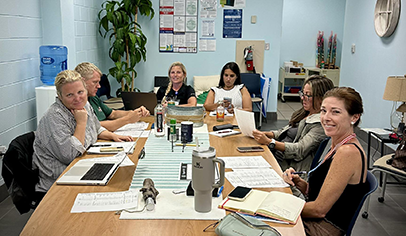
With clear planning, strong documentation, shared systems, and open communication, you can create a smooth leadership transition that sets your new PTO board up for success from day one.


Whether you’re a newly elected officer or you’re coming back for another year on the PTO board, the transition from one group of leaders to another can be tough to navigate—especially as many groups now manage both in-person and digital systems.
There’s a lot to do to prepare for the new school year, especially as PTOs now balance events, communication tools, and digital recordkeeping. Where do you start? How can you build on the great work the previous leaders did without feeling pressured to follow in their footsteps? Follow these proven tips and advice from seasoned PTO board members to help you get ready for what’s ahead.
👉 To help make this easier, download our free PTO/PTA Yearly Planner—a simple, ready-to-use tool to organize events, budgets, meetings, and key deadlines all in one place.
Consult the Experts
First of all, make sure the outgoing board members don’t disappear; you’ll need them—often not just in the summer, but throughout the year via email, shared drives, or messaging platforms. Amy Driehorst, president of the Jackman Road Elementary PTO in Temperance, Mich., suggests conducting an executive board meeting with both the outgoing and incoming officers to talk and share information. “Usually, everyone knows one another, but not always,” Driehorst says. “If someone has a question, it’s helpful if they actually know how to get in touch with their predecessor.”
Many groups now also create shared digital folders or transition documents so institutional knowledge isn’t dependent on one person’s memory or paper files.
Andrea Ptak, secretary of the PTA at Graham Hill Elementary in Seattle, says her group organized a workshop in the fall for new and returning board members during which they distributed a handbook for each office. “That was very helpful,” she says.
Some groups find it useful to have incoming and outgoing officers meet twice, often using a mix of in-person meetings and virtual check-ins (Zoom or Google Meet), especially when schedules are tight over the summer. At the first meeting, outgoing board members can fill in new leaders on the rest of the year’s activities. The new leaders can then shadow the old leaders on their way out, giving them an idea of what to expect the next year. A second meeting gives new board members an opportunity to ask more specific questions after they have reviewed transition materials and started planning their own agendas.
An informal setting like a restaurant or someone’s home can turn these gatherings into social occasions that encourage personal connections. Once everyone is on friendly terms, it will be easier for new officers to call upon their predecessors to answer questions throughout the year. (Incorporating a fun theme, like a 90s themed PTO board meeting, is a great icebreaker!)
Share Records
Just as important as forming good relationships is obtaining key information about how the group works. Make sure to ask the outgoing board to share any helpful materials in both print and electronic formats. Your transition checklist should include:
-
A copy of the PTO bylaws
-
Roles and responsibilities of the different board positions (more on that below)
-
A list of key contacts for the school district
-
A list of parent volunteers and their contact information
-
Copies of meeting minutes
-
The previous year’s budget
-
Bank account access information (including signers, login credentials stored securely, and current balances)
-
Shared digital files (Google Drive, Microsoft OneDrive, or PTO platform folders) for welcome packets, bylaws, and event materials
-
Templates for stationery and invoices
-
Binders and/or shared digital “procedures folders” for annual events and recurring tasks (many groups now maintain both print and cloud-based versions)
-
A list of preferred vendors and partners
-
A copy of school policies
Today, many PTOs maintain a shared digital “transition folder” that includes bylaws, budgets, vendor contacts, login access instructions, and event templates. This helps ensure continuity even when leadership changes suddenly.
“I would definitely ask about any policy issues, like making sure there is a custodian on-site for evening events, needing a staff person in the cafeteria kitchen if food prep is involved, etc., that need to be dealt with well in advance of an event,” Ptak says.
Ptak is also a big advocate of keeping track of events and programs in well-organized binders. As secretary, she kept a binder with meeting minutes and correspondence as well as important details about every annual school event. This information included job lists and responsibilities like decorating, concessions, DJs, flyers, permission slips, and menus. There was also a section for past fundraisers, with information on what worked and what didn’t.
“Having this information all in one place made for a smooth transition for new board members and kept us from having to reinvent the wheel every year,” Ptak says.
Many PTO treasurers also benefit from tools designed specifically for parent group finances. A dedicated finance manager can help streamline budgeting, expense tracking, and reporting so transitions between treasurers are smoother and less error-prone. PTO Today’s Finance Manager tool is built to help PTOs and PTAs stay organized and confident in their financial processes year-round. Get a free 30-day trial of PTO Today Finance Manager
Update Accounts
One transition that is very important to make immediately after the election of new officers is between the outgoing and incoming treasurers.
The new treasurer should be added to all financial accounts and platforms—including bank accounts, payment apps, and fundraising tools—ideally before the outgoing treasurer’s access is removed. Otherwise, if for any reason the outgoing treasurer becomes unavailable when her term ends, board members can find themselves in a bind if they can’t access funds. Many PTOs now also manage funds through platforms like online payment systems, event ticketing tools, and donation platforms, all of which should be transferred with shared admin access.
The treasurer handoff should also include a budget review and access to all financial platforms, including digital accounting tools and fundraising dashboards if applicable.
The new board should also consider an audit of the accounts at this time. Audits are a good way to learn the overall fiscal strengths and weaknesses of the group.
Driehorst concurs. “I first joined the board as treasurer,” she says. “The biggest challenges there revolved around wanting to make sure I knew when to meet with the accountant for taxes and making sure all the legal aspects were taken care of. It wasn’t a matter of communication, just learning something entirely new.”
As leadership changes hands, it’s also important to ensure your group is properly protected. Many PTOs and PTAs choose to carry insurance coverage to help safeguard officers and events during the school year. PTO Today offers insurance options designed specifically for parent groups, making it easier to stay covered as responsibilities transition between officers.
Prepare Leaders for New Roles
One of the most effective ways to ensure a smooth transition from one board to the next is to create positions designed to transfer experience and talent. Many parent groups have officers with one- or two-year terms, and increasingly use formal “succession planning” or “assistant officer” roles to help new leaders learn before taking over. Some PTOs also assign “co-roles” or vice presidents who shadow key positions (especially president and treasurer) to reduce transition friction.
“Our terms are one year, with a limit of two consecutive years. Typically, people automatically are elected to the second term if they want it,” Driehorst says. “What’s really helpful is when some of the positions, especially president and treasurer, begin their terms on opposite years. That way, you always have someone who has been intimately involved in the workings of the organization on the board.”
Common PTO Officer Roles
While every PTO is structured a little differently, most groups include a few core leadership roles:
- PTO President: Leads the PTO, runs meetings, sets agendas, and helps coordinate officers and committees. Often serves as the main point of contact with school administration.
- PTO Vice President (VP): Supports the president and steps in when needed. Often helps oversee committees, events, or specific initiatives like membership or programming.
- PTO Secretary: Keeps meeting notes, manages official records, and helps with communications like meeting minutes or announcements.
- PTO Treasurer: Manages the PTO’s finances, including budgeting, deposits, reimbursements, and financial reporting at meetings.
- Committee Chairs (often part of the “extended board”): Lead specific areas like fundraising, events, hospitality, or teacher appreciation, depending on the PTO’s structure.
These roles don’t have to be intimidating. Most PTO work is shared, flexible, and designed to fit around busy "real life" schedules.
Many PTOs create additional roles based on their school’s needs and volunteer strengths, so you may also see roles like:
- Social Media / Communications Coordinator: Manages PTO updates on Facebook, email newsletters, or school communications to keep families informed and engaged.
- Sunshine Chair: Supports families and staff during life events (like illnesses, new babies, or losses) by coordinating cards, meals, or small gestures of care.
- Event Coordinator: Helps plan and run school events such as family nights, dances, or book fairs.
- Fundraising Chair: Leads fundraising efforts, from planning campaigns to coordinating volunteers and tracking progress toward goals.
Expect Some Changes
Equally important to how the outgoing board can help a new board get up to speed is thinking through how the old guard will step aside and create space for new and innovative ideas from the newly elected members. It can be difficult to let go of a role you’ve played or a goal you’ve set and make room for new ideas. Likewise, it can be awkward for an incoming president and her team to make positive changes if the former board members maintain too big a presence after their term ends.
“I think it’s important to set up your own procedures that work for you and get your PTA in the swing of doing things your way, as opposed to the way the person in your position previously did things,” says PTA member Amanda Rodriguez of Deer Crossing Elementary in New Market, Md.
It’s important for the president to set a tone of diplomacy from the top. It may be helpful to set clear expectations with outgoing leaders about their level of involvement after transition—whether that’s limited advisory support or ongoing mentorship via scheduled check-ins.
If previous board members come to meetings and dominate discussions or continuously shoot down new ideas, the president may need to find a specific way for past leaders to contribute. Ideally, former leaders support a few defined areas (such as mentoring, documentation review, or event consulting) rather than continuing to operate in decision-making roles.
Remember that ultimately you all have the same goal—to do what is best for the children, the teachers, the parents, and the community. Your approach may vary, but the intent is the same. The next school year may seem like a long way off, but transition planning is most effective when it begins early, often immediately after elections. This is the perfect time for outgoing and newly elected boards to work together to plan another successful school year. And with a little thinking ahead, you can do just that.
Today’s most successful PTOs treat transition as an ongoing system—not a one-time handoff—using shared digital tools, documented procedures, and intentional leadership development throughout the year.
Once your new board is in place, one of the best ways to build momentum and strengthen relationships across your team is to learn and plan together. PTO Today Expos bring local parent group leaders together in person for hands-on workshops, idea sharing, and programs you can take straight back to your school. It’s a fun way for incoming boards to connect, get inspired, and start the year on the same page.